
SOWEGA Rising’s COVID-19 efforts extend beyond immediate crisis in Albany
Special Photo
By Alan Mauldin
[email protected]
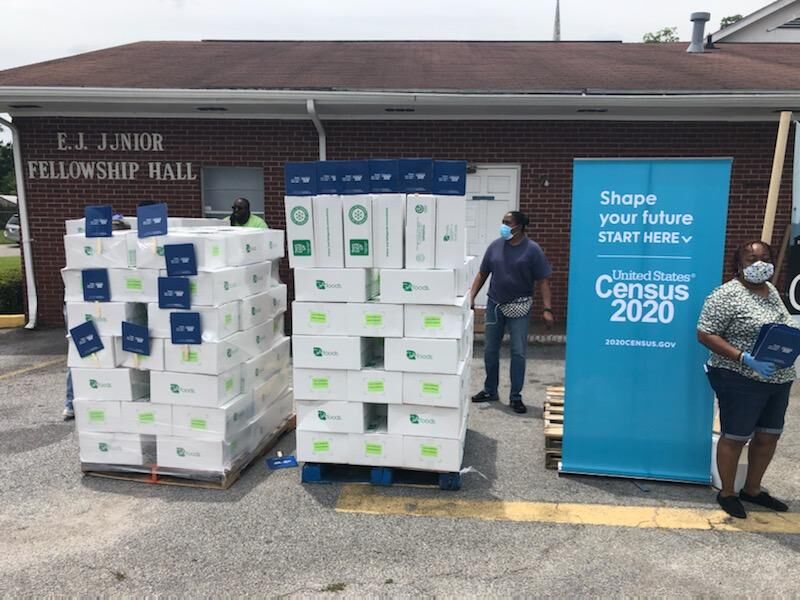
ALBANY — When disaster struck this year in the form of COVID-19, SOWEGA Rising rose to the occasion, distributing protective gear to businesses and distributing food to residents in southwest Georgia and beyond.
Now the advocacy organization is looking to examine the lessons learned during the pandemic that has killed more than 180 Dougherty County residents to address the health issues that led to the high mortality rate.
When the novel coronavirus struck in March, “we reached out to community leaders to ask what we could do,” said Sherell Byrd, co-chair of the organization. “We were told, clearly: Do what you can; we need help. You don’t need permission. Just go out and do it. So we took it to heart.”
When Gov. Brian Kemp re-opened the state’s restaurants and other businesses, the group held town hall meetings with businesses and elected officials to determine what needs businesses had. Many of the small businesses did not receive grants for personal protection equipment or to pay employees while they were closed, Byrd said.
SOWEGA Rising distributed 5,000 reusable and disposable masks to about 125 businesses, as well as 10,000 pairs of gloves and 100 no-touch thermometers and disinfectant spray and hand sanitizer.
With some farmers unable to sell their products to restaurants and schools, being forced to turn crops under in the field, Georgia producers partnered with the U.S. Department of Agriculture in the Farm to Families program.
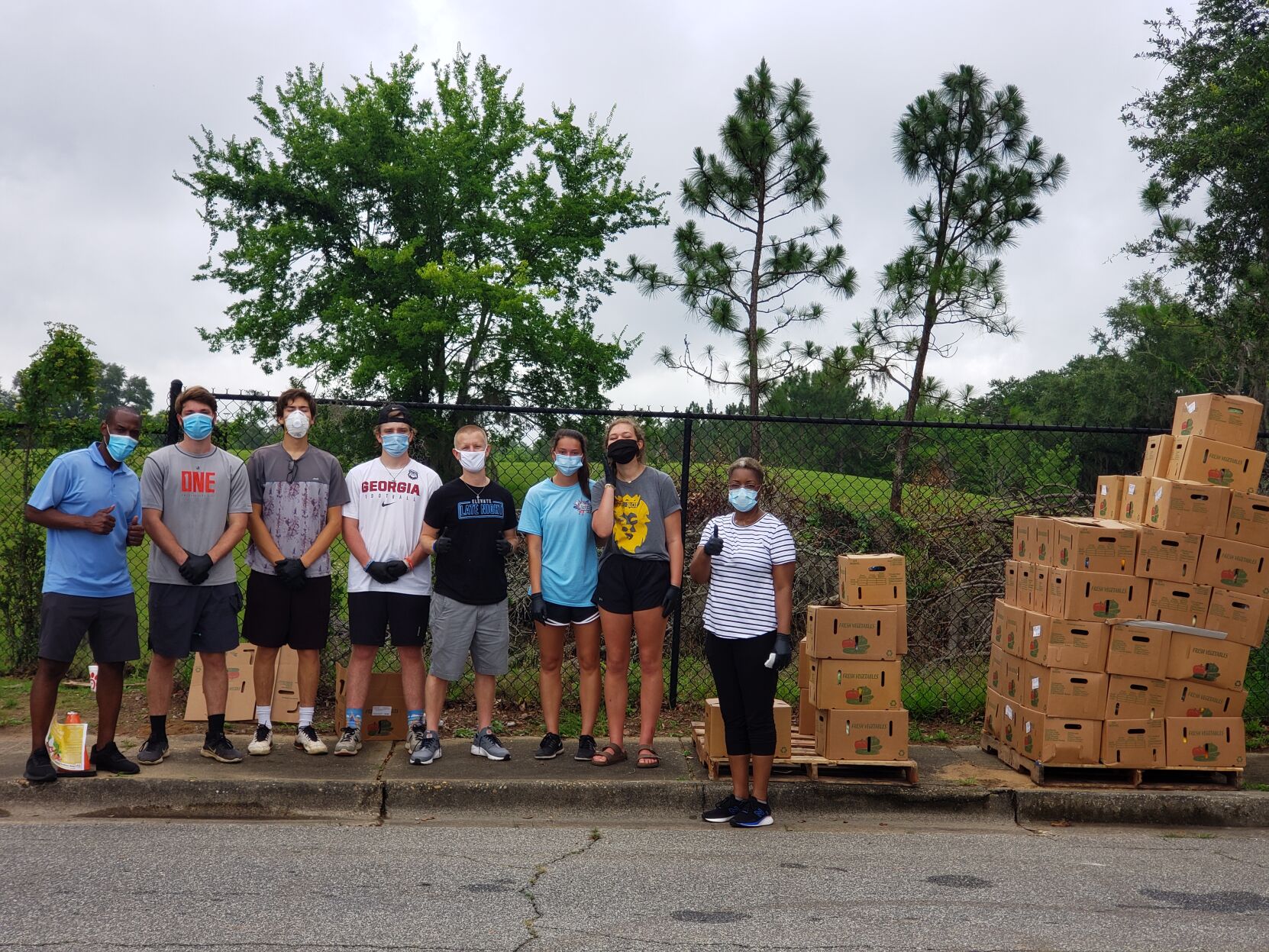
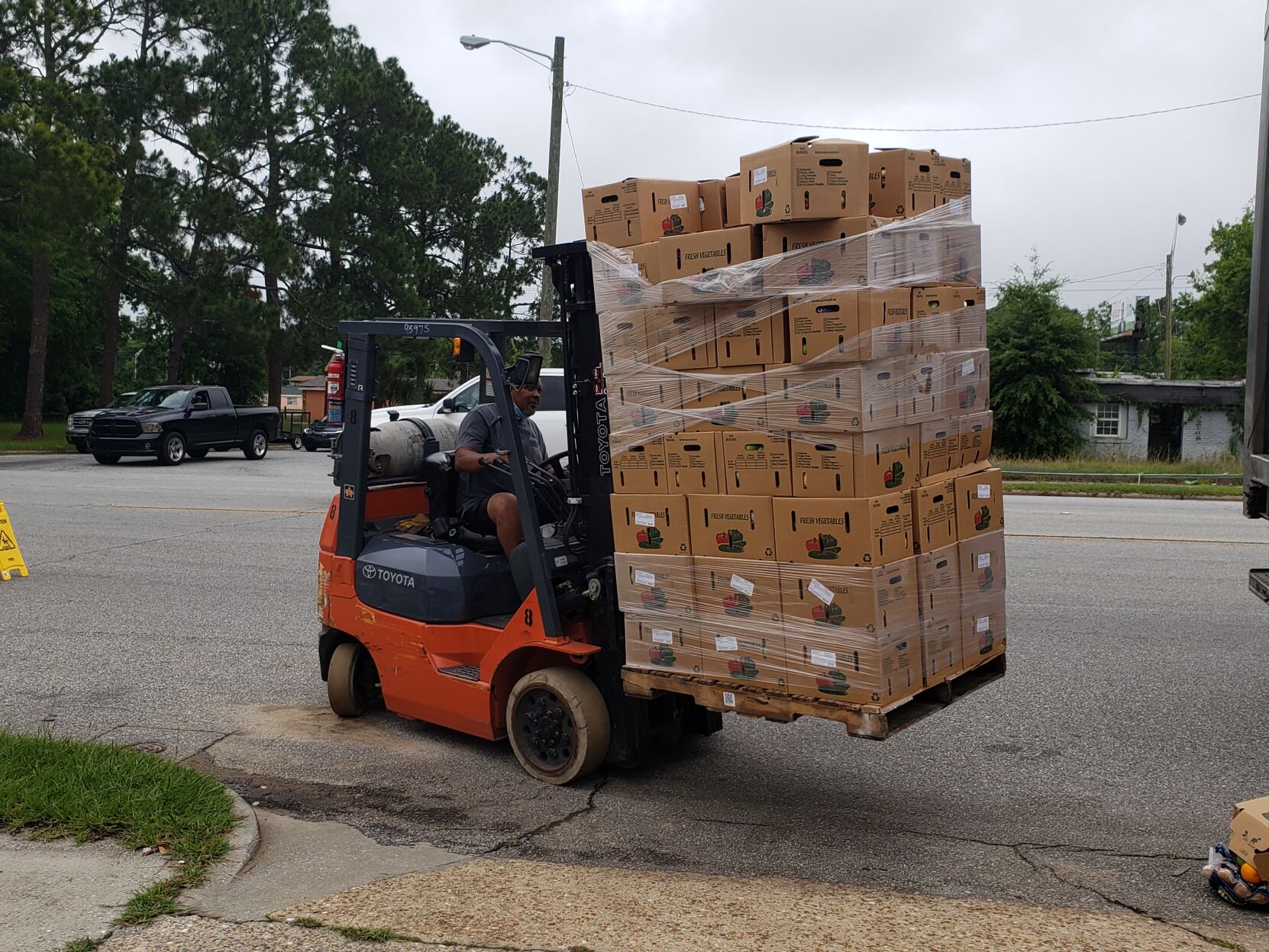
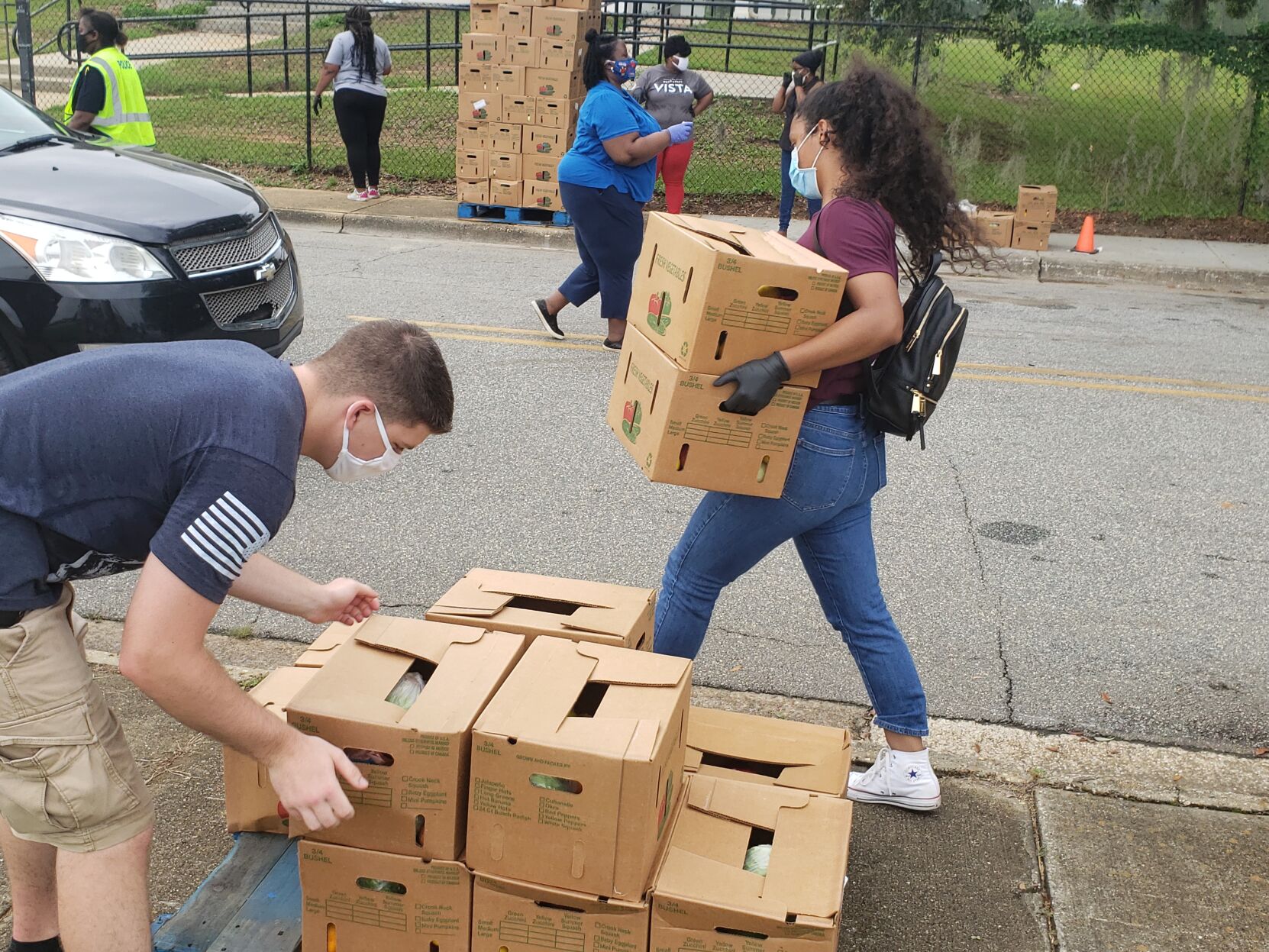
SOWEGA Rising and a group in southeast Georgia worked to distribute food throughout south Georgia and beyond. The Albany group’s efforts led to the distribution of 93,880 food boxes in the area that totaled more than 1.24 million pounds of food and 345,000 gallons of milk in 75 counties. That provided food assistance for some 23,500 families at 26 sites.
The pandemic, and high mortality rate in Dougherty County, was a reminder of how the poor nutrition of residents in southwest Georgia can exacerbate health issues. The disease was particularly deadly for individuals with underlying health conditions such as diabetes, heart disease and hypertension.
“The reason why the coalition is so critical right now is because, as we know, COVID-19 hit the community because of the underlying health rates and health issues that are centered around poor health as well as poor nutrition in our community,” Byrd said.
Through a partnership, a group including Albany State University, the city of Albany and Georgia Tech performed a food study of Dougherty County. The study examined food deserts — areas where residents do not have access to fresh meats, fruits and vegetables — as well as cost and other issues.
As a follow-up to that work, SOWEGA Rising will start conducting a food behavior survey in November.
The study provided maps showing the location of fast food restaurants and dollar stores, which Byrd said are poor substitutes for grocery stores that have a bigger selection of fresh foods.
“We are going to do a survey that allows us to ask people where they shop, how they shop, how long it takes them to get to the grocery store, the type of transportation they use,” she said. “We can get a great picture of how to address food security and hopefully inform our community leaders (about) what kind of grocery stores they attract. All grocery stores are not equal.”
The organization also is advocating for a moratorium on liquor and dollar stores.
The 30 or so dollar stores in the county indicate that neighborhoods, often in areas of poverty and minority areas, are inundated with those businesses, Byrd said. Liquor stores often drive crime such as domestic violence and attract other criminal activity, she said.
Beyond the food issue, the pandemic has caused economic distress in families where a member has lost a job. A large number of people are having issues with paying for utilities and rent, Byrd said. A recent update given to the group indicated there are more than 1,000 eviction cases pending in the county.
“(That’s) the long-term impact of COVID-19,” Byrd said. “We’re starting to see how that impact affects their day-to-day lives.”
Author

Related Articles
Albany Herald – July 14, 2026
In Lee County, they saw it… Bigger budget will mean improvements at… Small actions can help save…

Classifieds – July 14, 2026
Albany Classifieds and Legals…

‘Just Africa’ festival scheduled for third weekend in September in downtown Albany
A taste of the Caribbean and Africa is coming to Albany with a fall festival that will also bring African dance, a parade of children’s fashions, as well as vendors, live bands, and arts and crafts.
