
Split in U.S. House GOP raises potential for shutdown
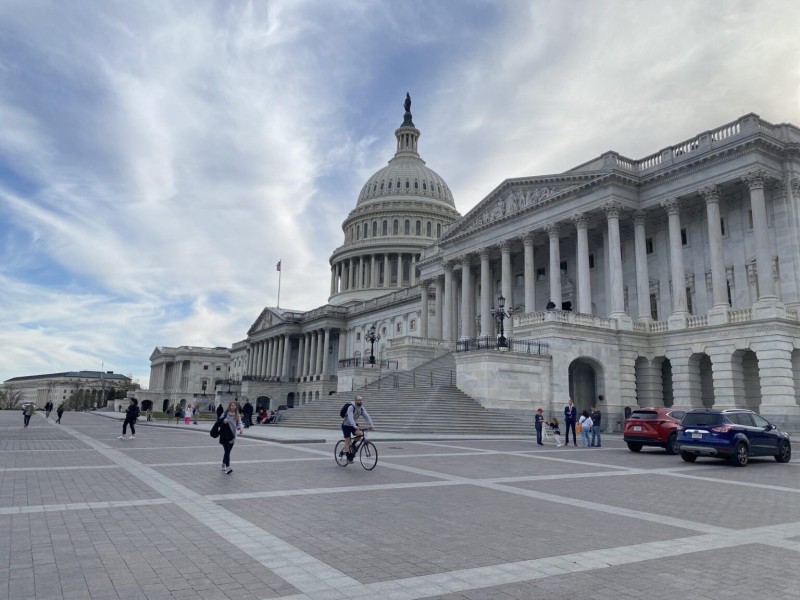
Special Photo: Georgia Recorder
By Jennifer Shutt
Georgia Recorder
WASHINGTON — Members of Congress jetted off for the August recess without a plan in place to avoid a partial government shutdown when the new fiscal year begins Oct. 1 — and the lawmakers who write spending bills acknowledge that it’s a real possibility, given deep divisions.
The stalemate stems from a split among House Republicans about how much the government should spend and whether the bills should be filled with far-right policy objectives.
“We’re in a difficult spot right now. I regret that we are here,” Arkansas GOP Rep. Steve Womack told reporters about House Republican divisions just before the recess. “We have an entire four or five weeks now to think about it. And maybe cooler heads will prevail when we come back in September and we can get our work done.”
Speaker Kevin McCarthy, a California Republican, and President Biden struck an agreement on spending levels back in May when they brokered the debt limit deal, though the House has written its dozen government spending bills significantly below those levels and loaded the bills up with social policy riders that couldn’t pass as stand-alone legislation.
But that hasn’t appeased some hard-line conservatives, who argue the party should force a government shutdown to move the bills even further to the right.
The disagreement among House Republicans could complicate efforts to reconcile the spending bills the Appropriations Committee wrote with those in the U.S. Senate, where lawmakers have 12 bipartisan bills ready to go.
Womack, who wrote House Republicans’ Financial Services and General Government spending bill, said he’s frustrated with the far-right members’ approach to the annual process.
“It’s one thing if what you’re demanding has a chance to become the law of the land, but it’s a whole other thing if you’re doing it just to be stubborn, and to be dug in, and to basically play my-way-or-the-highway politics,” Womack said. “That’s just not gonna work in this environment. And we’ve got a limited amount of time. It’s an emotionally charged debate that’s going on. It’s bitterly divided. It’s shirts and skins, and the American people, I think, deserve a little better than that.”
The Financial Services bill funds the Treasury Department, the judiciary and about 30 smaller agencies, including the Federal Communications Commission, the National Archives and Records Administration, and the Small Business Administration.
Senate appropriators expressed similar views, and several said they expect the final spending bills will look much more like the bipartisan bills their committee has approved.
Montana Democrat Jon Tester, chair of the Defense spending panel, said he expects the final bills would look “more like the Senate bill than the House bill.”
Womack said it isn’t out of the question that the House may just have to accept the Senate’s government funding bills outright, without being able to advocate for some of the spending levels and policies within their bills.
“Look, if we get too unreasonable, I expect that’s what the Senate will do — they’ll say, ‘Well, here it is. Take it or leave it’ and leave town,” Womack said.
What would a shutdown look like?
The first deadline Congress faces will be Oct. 1, the start of the new fiscal year and the date when there must be a new government funding law in place. Historically, that’s a stopgap spending bill through December.
The kick-the-can-down the road approach is often seen as an opportunity for a couple more months of negotiations, though there’s already concern certain factions of the Republican Party may try to block that from moving forward.
If that happens, Congress would plunge the federal government into a partial shutdown that would be drastically different from the 34-day shutdown during the Trump administration.
When that prolonged stalemate began, Congress had already approved five of its bills, meaning the Defense, Education, Energy, Health and Human Services, Labor and Veterans Affairs departments weren’t affected by the shutdown. Congress had also passed its own funding bill, exempting themselves and their staff from the impacts of the funding lapse.
The second deadline would be whenever the first stopgap expires, or Jan. 1.
If the dozen annual government funding bills don’t become law before the new year, a provision in the debt limit law would force a 1% across-the-board spending cut to defense and domestic discretionary programs.
There’s bipartisan concern within Congress that such a cut would have severe consequences, especially because lawmakers wouldn’t be able to direct which programs would be impacted and which wouldn’t.
McCarthy has begun publicly advocating for getting all of the spending bills enacted sooner rather than later, arguing that a series of stopgap spending bills would leave policies and funding levels in place from when Democrats controlled the House, Senate and White House.
McCarthy said it’s his intention and his hope to pass all dozen government funding bills before the start of the fiscal year Oct. 1, though he didn’t clarify if he meant pass in the House or pass Congress.
The former is much more likely than the latter, though neither is guaranteed given the shortened timetable and the politics at play.
Wisconsin Democratic Rep. Mark Pocan said House Republicans are trying to balance different factions of their caucus in the same way the characters of “The Addams Family” interact in the fictional TV show.
“What they’ve done so far has put their values out there, which are pretty bad ones,” Pocan said, just days before Republicans removed funding for three LGBTQ projects from one of the spending bills. “I think the question will be within the makeup of their caucus — kind of a ‘Cousin It, Morticia, Uncle Fester.’”
Pocan said he’s concerned House Republicans’ decision to reduce spending levels below the debt limit deal, and add in especially conservative policy language, dilutes the House’s negotiating stance with the Senate.
“At the end of the day, my worry is that that gives the Senate even more leverage — they’re writing the bill, they have the keys to the car, while we’re kind of riding in the trunk — because we haven’t done the work that is necessary when you get the conference committee to actually have a House position that, regardless of party, is important to have in that process,” Pocan said.
Author

Related Articles
Albany/Dougherty County among local governments looking at data centers
“Our understanding is that data center developments look like an easy fix for the problems that face rural America, but this is a Faustian deal at best. You can see the effects in communities across the state and country.
Albany Herald – July 14, 2026
In Lee County, they saw it… Bigger budget will mean improvements at… Small actions can help save…

Classifieds – July 14, 2026
Albany Classifieds and Legals…
