Tear down this house: Dougherty Commission working to demolish storm-damaged structures
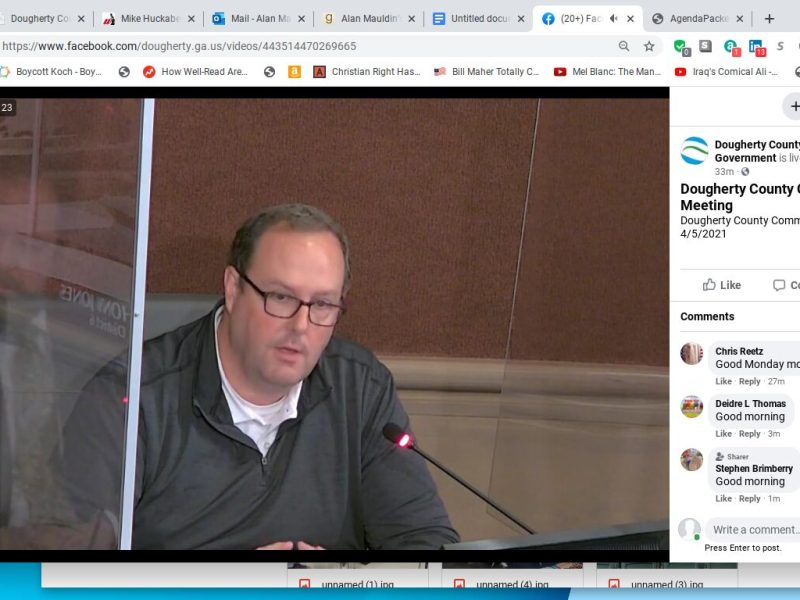
Dougherty County Commissioner Russell Gray said Monday that the county should seek reimbursement from property owners in cases where it demolishes dilapidated houses and businesses.
Staff Photo: Alan MauldinBy Alan Mauldin
alan.mauldin
@albanyherald.com
ALBANY — With residents’ complaints mounting over unsightly houses in their neighborhoods, the Dougherty County Commission is looking to find a way to clean up or remove more blighted properties.
Years after 2017 and 2018 storms damaged structures throughout the county, commissioners are still fielding calls and dealing with exasperated residents. Because so much time has passed, residents are losing patience with elected officials on the issue, Dougherty County Commissioners Anthony Jones said during a Monday meeting.
“After you tell people for so long, they start to lose confidence in you,” he said of his assurances to residents that action would be taken.
One of the most frequently mentioned houses is one in Jones’s District 6 on Barbragale Avenue, which was singled out by both Jones and District 3 Commissioner Victor Edwards. There is a fallen tree on the residence: one of the reasons it has drawn the most complaint calls.
Another location at the top of the list is a former convenience store at Ivy Lane and U.S. Highway 19.
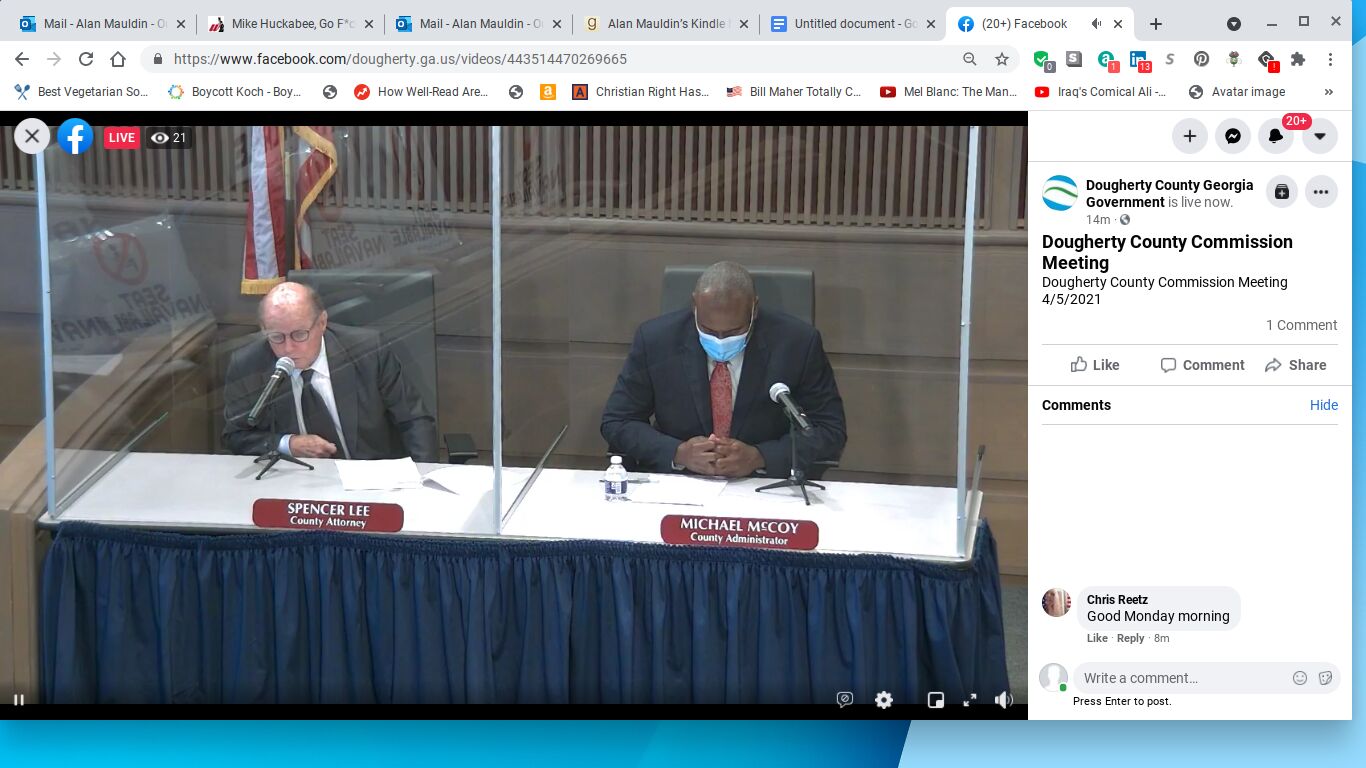
In the roughly one-hour discussion of the issue, commissioners were made aware of a number of issues that stand in the way of progress. One of those is money, according to Dougherty County Attorney Spencer Lee.
“It’s very easy to do it,” he said. “We can take down every dilapidated property in Dougherty County within six months if you’re willing to do the demolition piece.”
That, however, would require a much more hefty budget than the county currently has earmarked for such work.
Out of the $50,000 included in the 2020-2021 budget, the county already has demolished three structures and is in the process of taking down an additional three, Lee said. And a job such as the convenience store, which includes gas tanks on the property, would take a significant amount of money.
“The point is, here again, we have the tools,” Lee said. “There is neighborhood blight, and it’s bringing property values down. That’s the justification. The question is how much money you want to spend?”
Another proposal, put forward by Commission Chairman Chris Cohilas, would be to have the county’s Public Works Department prepare a list of all of the dilapidated and damaged structures.
The chairman said it is frustrating to see the structures around the county that are in a state of unrepair or have blue tarps over damaged roofs so long after the damaging weather events.
“We are at the point we know there is some housing stock that is never going to get fixed,” Cohilas said. “I’d like to get an estimate (that says) this is what our costs are going to be.”
Commissioners could then identify the properties in his or her district that should be prioritized, Cohilas said.
Lee brought up two obstacles to such an approach. One is that with only one Code Enforcement officer working in unincorporated Dougherty County, it would be difficult to make such an inspection in a timely manner.
The second is that it would alter the current complaint-driven process. In the event the county starts identifying which structures to tackle, it would open the door for owners to claim selective enforcement in court hearings, Lee said. As things stand now, the county can justify taking owners to court based on the complaints of residents.
“Every once in a while we get a person who claims it is selective prosecution,” he said. “That’s a legal thing we have to be aware of, selective prosecution.”
For Commissioner Russell Gray, having the county spend taxpayer dollars to clean up for owners who refuse to do so could set a precedent. He suggested placing tax liens on other properties or businesses owned by individuals who own dilapidated structures. Otherwise the owners will simply allow the county to do the work without making any attempt to offset the costs.
“If we don’t have a more aggressive code enforcement, a penal code, there is no incentive for them to prevent that from happening,” Gray said. “We absolutely have to be more proactive with properties, or everybody will do that.”
Ultimately, Cohilas suggested that commissioners take a week to think about the information they heard on Monday and come back at a later time for additional discussion.
“If we actually know what the cost is, we can develop a two-year, a three-year, a five-year plan,” he said.
A smaller list of those properties that are responsible for the most complaints in each district would be a good place to start, County Administrator Michael McCoy told commissioners.
“We don’t have the resources to go around in all of the unincorporated area and find what is an issue and what isn’t an issue,” McCoy said. “If commissioners give us a list, we can go out and get estimates.”
Author

Related Articles
Dawson’s $10.2 million sewer project leaves major financial questions unresolved
As Dawson’s finance director resigns and operating pressures mount, records show $10.2 million in sewer funding, frozen loans, missing audits and gaps in the public accounting of project money.
As assessments climb, DCSS signals sizable millage cut
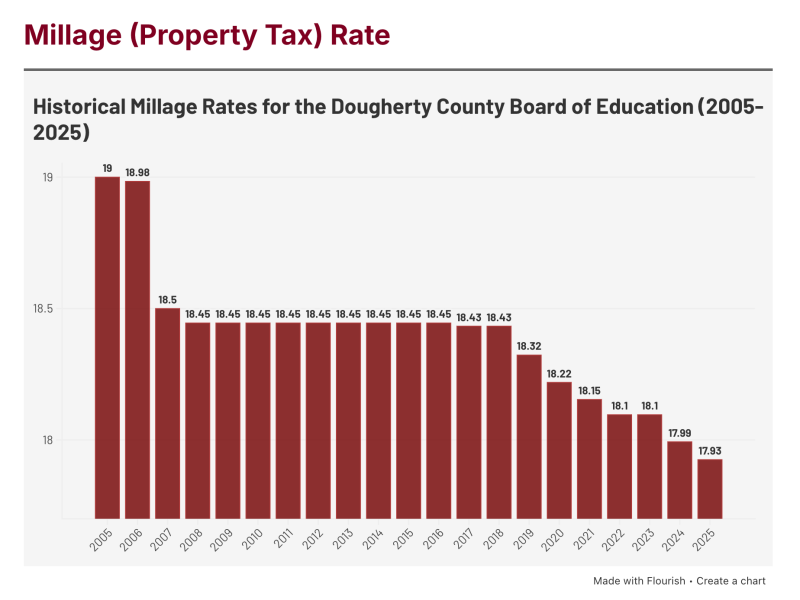
As Dougherty County property owners react to sharply higher reassessed values, school officials say the Dougherty County School System expects to substantially reduce its property tax rate for the ninth consecutive year.

FACT VS. ALLEGATION: What Lee County superintendent contracts and state records actually show
After months of fierce public criticism and the Board of Education’s June 22 renewal of its superintendent’s contract, the Albany Herald obtained LCSS contracts behind the controversy to separate fact from allegation — giving Lee County residents the transparency and clarity the public debate deserves.