
The future is today: Driverless orchard sprayer on display at Sunbelt Ag Expo
Staff Photo: Alan Mauldin
By Alan Mauldin
[email protected]
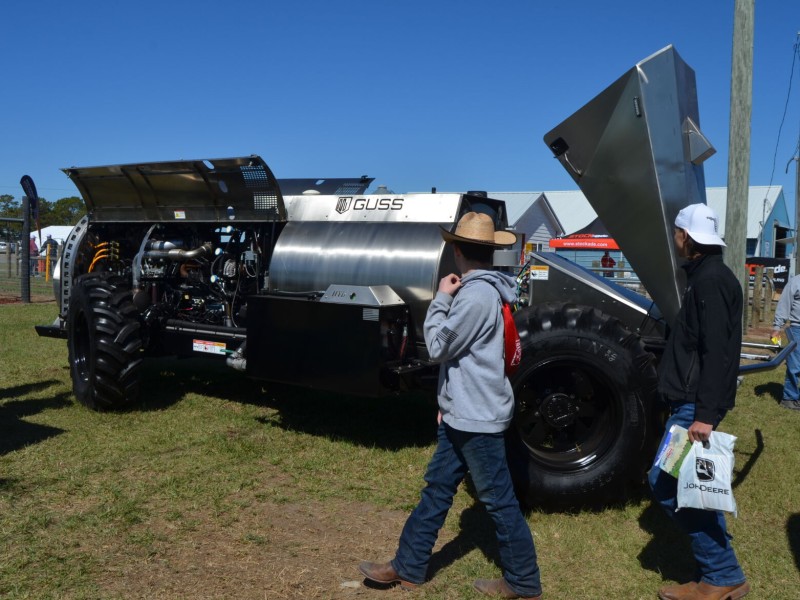
MOULTRIE — The world of tomorrow seems to have appeared this week at the Sunbelt Ag Expo, where a fully automated orchard sprayer was among the high-tech farm equipment on display.
Not only does the GUSS GPS-guided unit navigate itself, with no driver — not even a steering wheel to be seen — it applies chemicals only where needed. The annual farm show in southwest Georgia ended on Wednesday.
“When it sees a tree, it will spray,” Chris Kent, a representative for GUSS Automation, said. “If it doesn’t see a tree, it won’t.”
GUSS, short for Global Unmanned Spray System, sells the base unit for $298,000. It can be used by farmers for all types of orchard applications, including pecans, which are a big crop in the region, and citrus, a crop that is being grown more and more in the state.
In addition to the ability for sensors to identify the greenery that needs to be sprayed, the unit will use the lower nozzles only for small trees and will turn on the full spectrum for fully grown trees.
The end result is that with the WEED-IT system technology, farmers use less chemicals, which is good for their bottom line and the environment.
“You save up to 80% in chemical costs,” Kent said.
The autonomous system also means there is no driver to be exposed to the chemicals, he said.
“You don’t have any of the exposure of the guy on a tractor with the chemicals,” Kent said. “We’re the first one to do any of the self-driving applications.”
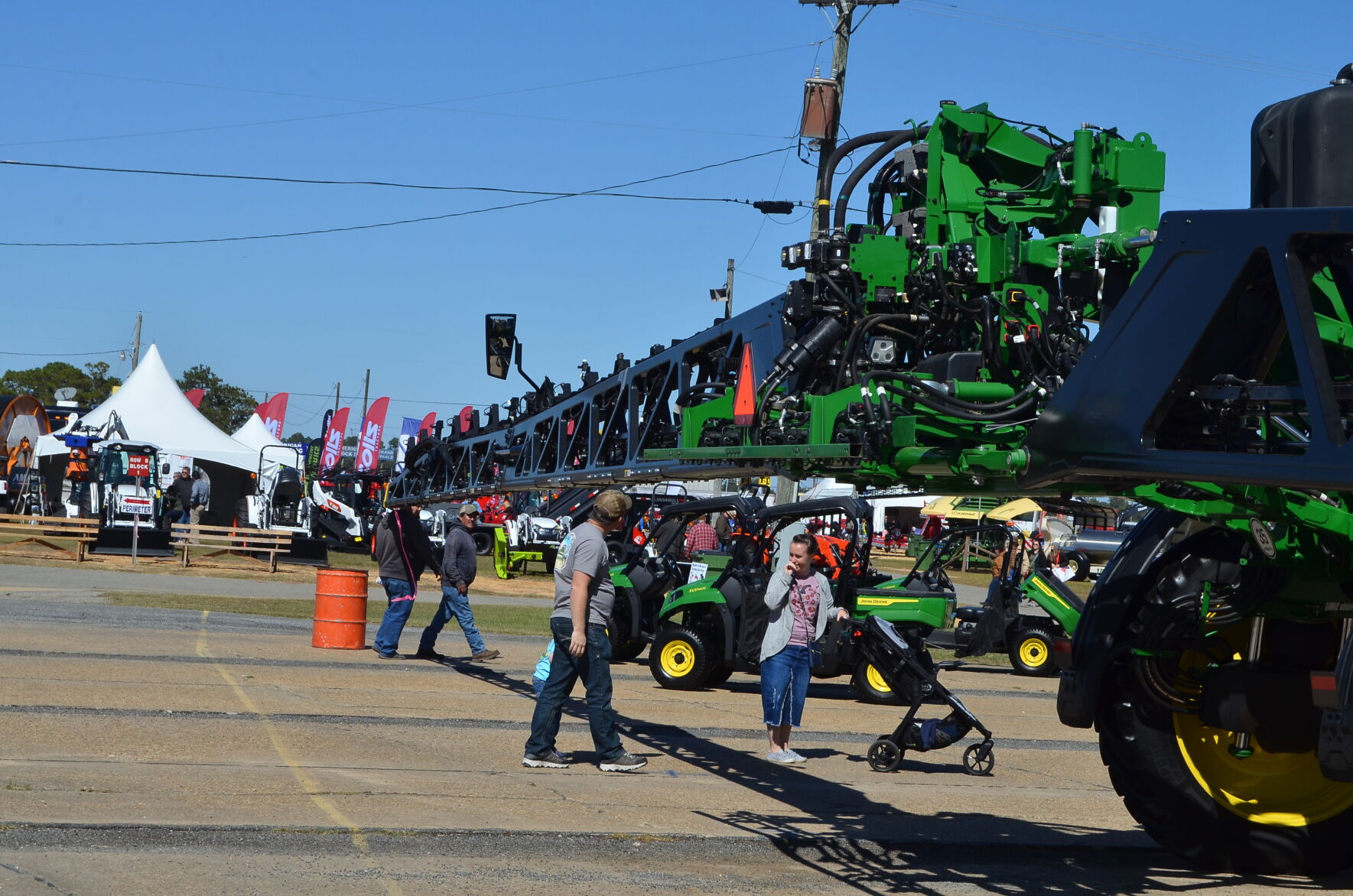
Similar technology was on display at the John Deere section, which included a boom spraying system that also uses cameras to spot weeds and applies herbicides only to the unwanted specimens.
“It’s got 36 cameras across the boom and can detect weeds in cotton growth and corn growth,” company representative Michael Porter said. “It can broadcast (spray) across the field or just spot spray.”
Through computer learning, the system trains itself to recognize which plant growth is harmful to crops and douses them with weed-killing chemicals.
The unit is in limited production, and a base model starts at $600,000, with the price going higher based on features.
Because of the ability to use a smaller amount of chemicals, farmers are free to use more expensive herbicides that are more effective for spot treatments of weeds, Porter said.
That could be a help for farmers faced with glyphosate-resistant species like pigweed that can shrug off applications of older herbicide varieties.
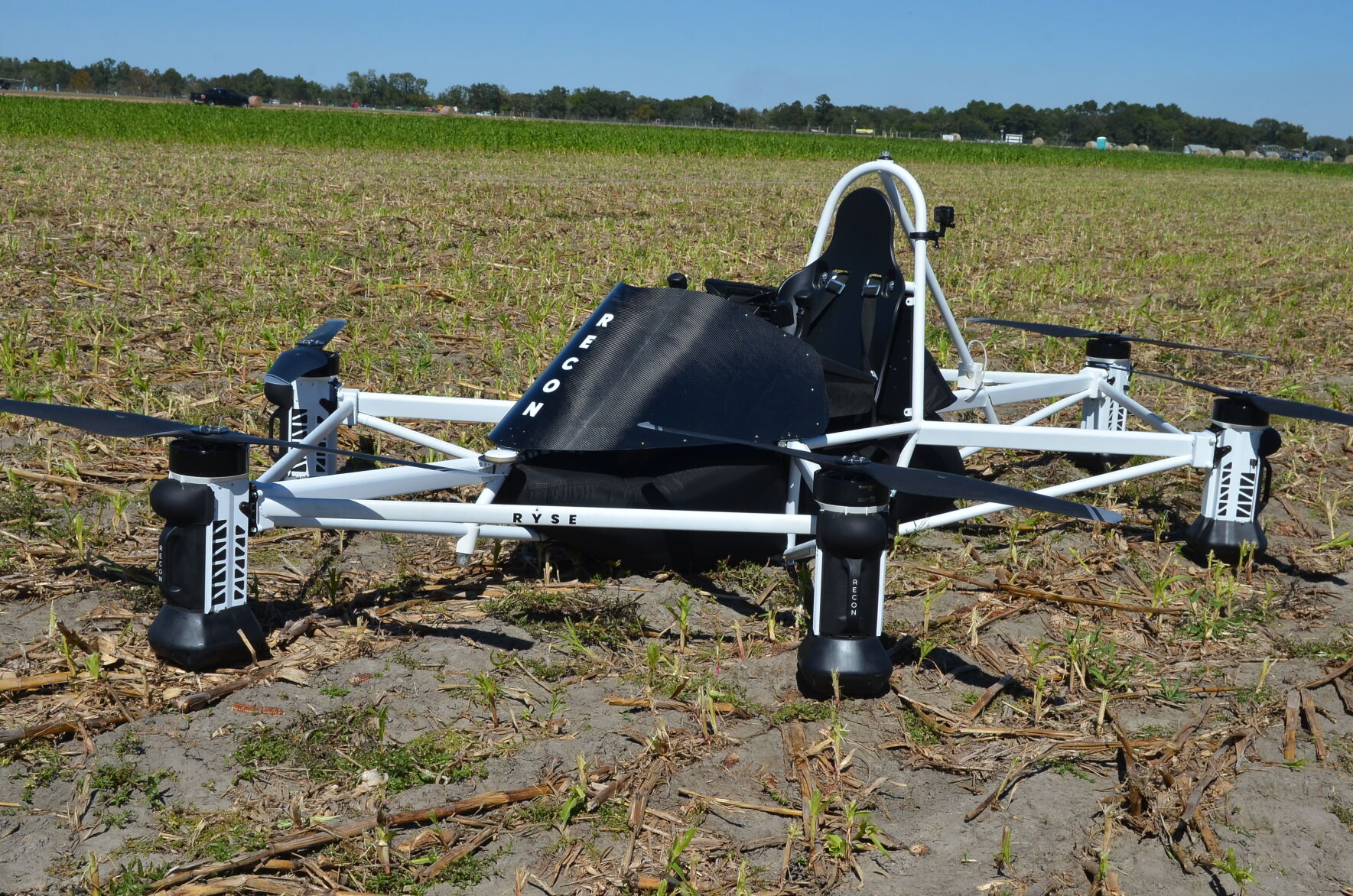
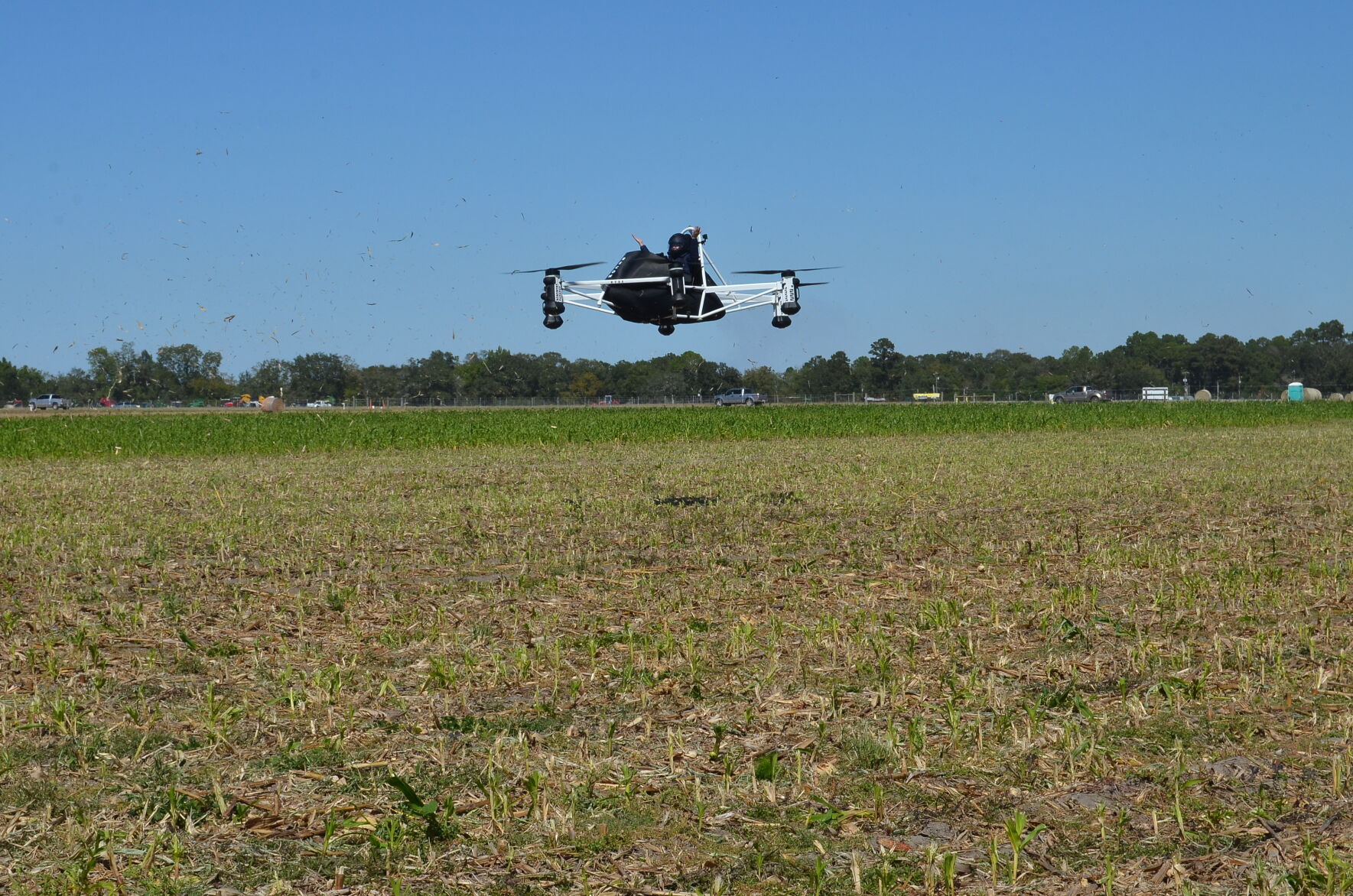
Out in the demonstration fields, a crowd was awed as a pilot completed showing off the RYSE Aerotech manned drone.
The drone, powered with six propellers, can be used in the traditional way by remote control, or a pilot can get inside and fly it around. It can reach a height of up to 1,000 feet, but the demonstration on Wednesday was limited to a short distance above the ground due to the winds prevalent that day.
And for the homeowner who wants a neat lawn but doesn’t like pushing or driving a mower around, there was the Greenworks battery-powered autonomous mower, a sort of Roomba for the yard.
“It’s been pretty busy,” Sean Collins, representing Carswell Distributing, which had the Greenworks mowers and Redmax zero-turn mowers on display, said. “A lot of people are interested in the battery-powered mowers.”
Author

Related Articles

Albany Herald – July 4, 2026
MCLB-Albany welcomes new commander as… Colonial Dames: 100 years of… Albany State graduate Justin Clements earns…

HAPPY 250TH ANNIVERSARY AMERICA
America Celebrates 250 Years???

Classifieds – July 4, 2026
Albany Classifieds: Real Estate for Sale: 1835 Arlington Park Circle… Jobs: Irrigation Tech needed…
