
UGA researcher explores ancient wheat genomes to improve bread wheat diversity
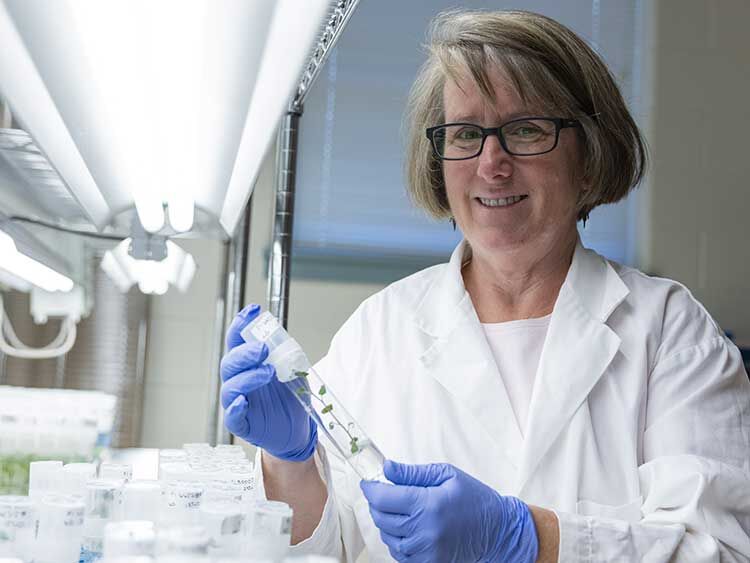
Special Photo: Andrew Davis Tucker/UGA
By Maria M. Lameiras
UGA/CAES
ATHENS — University of Georgia plant genomics expert Robin Buell is part of an international team seeking to mine an untapped genetic resource for wheat improvement by sequencing the genomes of ancient varieties representing the worldwide diversity of bread wheat.
The two-year project — called the Wheat Diversity Project — is funded by the U.S. National Science Foundation and will bring Buell together with researchers from the International Wheat Genome Sequencing Consortium and collaborators in France to sequence 12 landrace genomes and update the IWGSC Chinese Spring reference sequence, which is the primary genome reference for bread wheat research.
Landraces are wheat varieties adapted to local environmental conditions and management practices. They were traditionally farmed across Northern Africa, Europe and Asia for thousands of years until their replacement by modern cultivars with higher yields and farming qualities. This resulted in a substantial reduction of genetic diversity in cultivated wheat.
Landraces are reservoirs of key agronomic and adaptive traits for crop improvement. They are genetically diverse and contain genes associated with disease resistance, grain-traits, nitrogen-use efficiency, and tolerance to environmental stresses such as drought, heat and salt, as well as genes coding for proteins involved in flour quality and dietary sensitivity. Wheat — one of the most cultivated and consumed crops worldwide — is a key food security crop, providing about 20% of dietary calories and proteins for humans worldwide.
“Development of the initial IWGSC CS RefSeq in 2018 served as a springboard for genetics, evolution, breeding and biotechnology advancements in wheat,” Kellye Eversole, IWGSC executive director and lead principal investigator on the diversity project, said. “Updating this resource and providing new landrace genomes will enable further advancements in wheat research and breeding.”
“The genome sequencing of 12 strategically selected landraces, along with the updated IWGSC CS RefSeq, will provide a crucial step forward in worldwide efforts to improve wheat by identifying the genomic diversity that underlies adaptive traits,” IWGSC Diversity Project Manager and co-PI on the project Joshua Stein said. “This will allow for the development of hardier and improved wheat varieties to meet future demands of climate change, population growth and sustainability of natural resources.”
The genome sequences will be generated by applying recent advances in long-read sequencing, optical maps and chromosome conformation capture sequencing. All genomes will be annotated using established pipelines and accession-derived transcriptome data to inform gene models across the panel.
To make these resources immediately applicable to advance wheat breeding, project co-PI Robin Buell of the UGA College of Agricultural and Environmental Sciences will develop a practical haplotype graph — a powerful tool that can be used for both genomics and breeding research to accelerate future innovations. The graph will be publicly available and accessible to the entire wheat community via the IWGSC Data Repository at INRAE-URGI and via the U.S. Department of Agriculture data repository GrainGenes.
Additionally, the Wheat Diversity Project team will conduct education and outreach activities in the U.S. to raise public scientific literacy by engaging in urban afters-chool STEM programs, training educators, and providing paid summer internships for talented minority students to gain training in laboratory and bioinformatics skills in plant sciences.
Officially called “TRTech-PGR: Unlocking bread wheat genome diversity: Foundational genome sequences and resources to advance breeding and biotechnological improvement of a global food security crop,” the NSF-funded project will launch in January 2024 and continue through December 2025.
Author

Related Articles
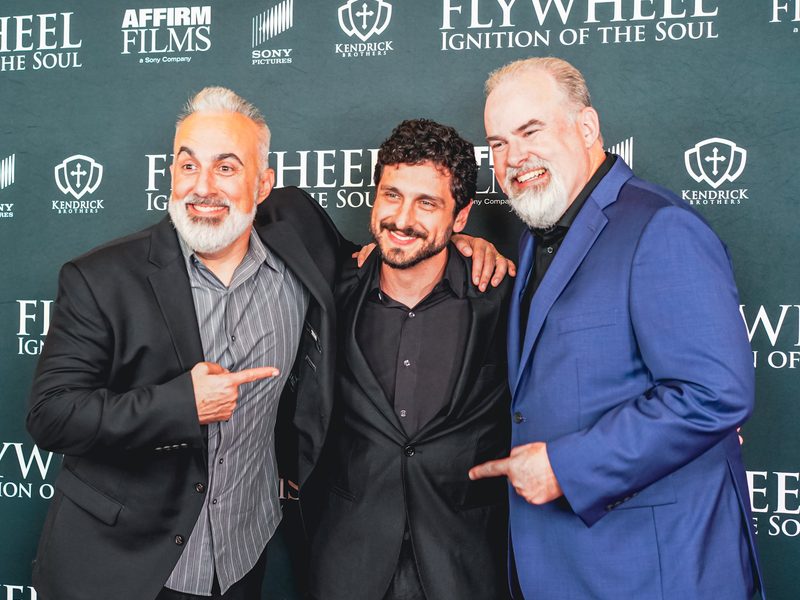
‘Flywheel’ comes home as Kendrick brothers bring Brazilian remake to Albany
Twenty-three years after a $20,000 movie made with church volunteers launched their filmmaking careers, Alex and Stephen Kendrick returned Thursday to the Albany theater where “Flywheel” first reached an audience — this time with a Brazilian cast telling the story.

Heated exchanges, lengthy delays precede Lee school board’s 17.96-mill vote
The Lee County Board of Education adopted a 17.96-mill operating tax rate Thursday after a crowded public hearing and a lengthy wait for a vote that left frustrated residents at the meeting until close to 9:30 p.m.

Turnout steady during first week of early voting in Dougherty County
Early voting started statewide on Tuesday, giving voters three weeks to cast ballots ahead of the Nov. 3 election.
