
UGA Turf Team supports Mexican professional soccer leagues

Special Photo: UGA/CAES
By Emily Cabrera
UGA/CAES
ATHENS — Goooooooal! For billions of soccer fans around the world, the iconic exclamation announces either a thrilling victory or a crushing defeat as another point is scored on the field of play. And while most eyes are on the game, there is an entire industry of professionals whose main concern is for the grass on which the game is played.
Historically referred to as “pitch,” the playing surface is maintained through precise management and is the subject of an entire field of science.
The University of Georgia’s turf program is supported by a group of faculty and research scientists throughout the state dedicated to year-round turfgrass research and outreach efforts. Members of the UGA Turf Team were recently invited to develop a training and certification program to support the field managers of Mexico’s premier soccer leagues — Liga MX, the top professional men’s soccer division, and Liga MX Femenil, the country’s top women’s soccer division.
Leading the effort is Alfredo Martinez-Espinoza, a professor in UGA’s College of Agricultural and Environmental Sciences, UGA Cooperative Extension plant pathologist and key UGA Turf Team member. For more than 30 years, Martinez-Espinoza has specialized in diagnosing and managing pathological diseases of commercial turfgrass and has built numerous international collaborations with research partners throughout Central America and in Spain.
Having learned of UGA’s impressive turfgrass program and capacity to reach Spanish-speaking audiences, Conrado Sandoval requested the assistance of the UGA Turf Team to address the lack of professional, research-based support in the country for managing turfgrass.
In 2022, Sandoval commissioned a cumulative, detailed evaluation of the more than 180 soccer fields and training facilities throughout Mexico to identify the main issues field managers face. The top concerns were climate, pests and diseases, proper use of equipment and turf management techniques, irrigation, plant nutrition, and integrated pest management practices.
“These are problems we’ve sought to address over the years, but with the 2026 World Cup around the corner, we will host many of the games in our biggest stadiums,” Sandoval said. “We need to have a better grasp on dealing with these issues in-house, which is why it was critical for us to partner with UGA’s internationally recognized turf program.”
Natural turf has another, more aesthetic benefit as well. Soccer is the most watched and most participated sport in the world, played on every continent and in every country. Sandoval explained that, from a purely business perspective, the optics of the field of play are incredibly important for the billions of people watching.
The Liga MX is the fourth-most-attended football league in the world and ranks second in terms of television viewership in the United States.
“Television is the fundamental tool of the football industry,” Sandoval said. “The image the viewer receives, both on the field and on the screen, must be the best possible. Seeing large patches of diseased grass or discoloration from nutrient issues potentially conveys a lack of professionalism in our management. We aim to address that by working with the UGA Turf Team.”
Joining Martinez-Espinoza, UGA Turf Team members Clint Waltz, Shimat Joseph and Patrick McCullough developed the training program and supporting materials, delivered in both English and Spanish, to provide the foundation of a professional certification program that will be used as the FMF seeks to raise the level of professionalism across the industry. Following the seminar series, participants are required to take and pass an exam as part of a standardized certification program.
“I want to express my greatest gratitude for this course,” Juan Carlos Castelan, a field manager for Azteca Stadium in Mexico City who participated in the certificate program, said. “In our country, we don’t have a company or service dedicated to this type of training and it’s sorely needed to build uniformity between the different sports facilities. Now, we have a diverse team of people who work throughout the country with the scientific knowledge and experience to put this into action.”
“This is the wonderful thing about working in applied science,” said Martinez-Espinoza. “Our jobs are to filter through all the problems presented to us and pinpoint research-based, actionable solutions that can be taught so our clients are competent and prepared as a result of working with us.”




Author

Related Articles
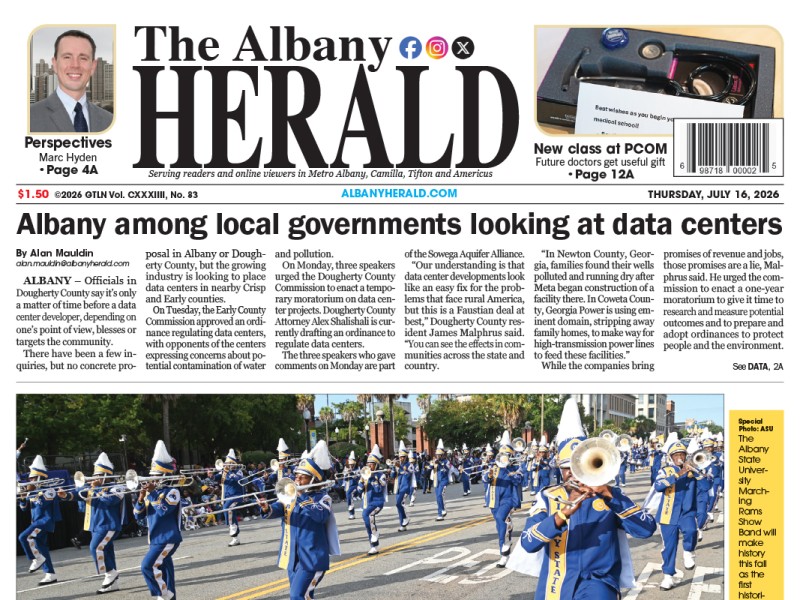
Albany Herald – July 16, 2026
Albany among local governments looking… ASU Marching Rams first HBCU band
invited…

Classifieds – July 16, 2026
Jobs; Cemetery Lots; Garage Sales; Public Aucitons; Etc…
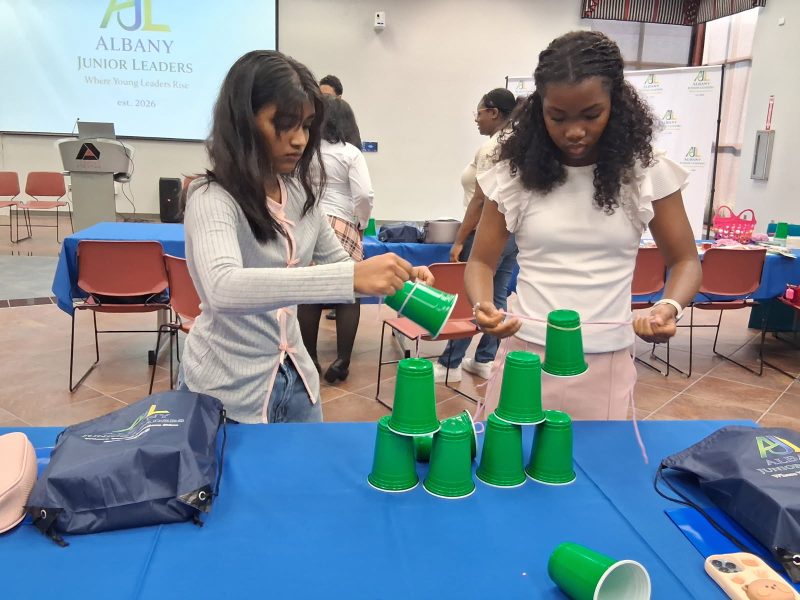
Adult leadership group spreads concept to high school students
“The purpose of Albany Junior Leaders is to pull together leaders from all over the community. We wanted to give these youth the same experience and the same exposure we’re getting in Leadership Albany.”
