
VenaSeal vein procedure provides relief for Albany Surgical patients
Venous reflux disease leads to swelling as blood pools in the lower leg veins
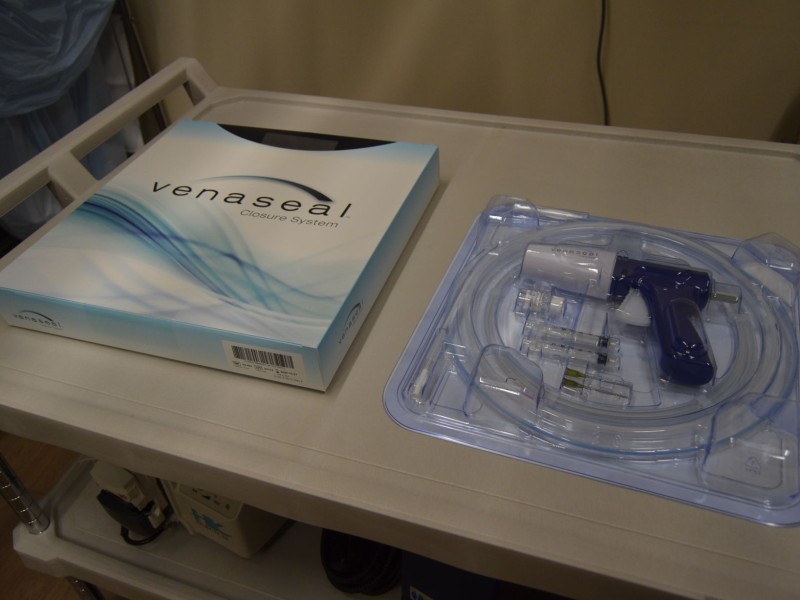
Staff Photo: Jennifer Parks
By Jennifer Parks
jennifer.parks@albanyherald,com
ALBANY — A relatively new procedure that essentially glues diseased veins in a manner that provides more comfort to patients is seeing positive results at Albany Surgical.
Dr. Price Corr, a physician at the practice and a member of the American Venous Forum, is the physician who performs the procedure — known as VenaSeal. Brandi Sauls, a licensed sonographer, is involved in the care of the patients receiving the procedure.
“We are basically using glue so patients don’t have to have as many shots to numb it,” Sauls said. “It does not require heat, and patients are more comfortable and don’t have to wear compression hose.
“It is not a high-risk procedure. There is no risk for subsequent nerve damage.”
A patient has an ultrasound before the procedure to assess the condition of a vein and to plan the procedure.
“If a nerve is close to the vein, or if there is a straight enough path for a catheter (based on ultrasound results),” Sauls said, “there is no limit on the size of the vessel or amount of reflux.
“A lot of veins that we see (with the plain eye) are not the root of the problem.”
A needle stick is used to numb the site, and a catheter is inserted into the leg. The catheter is placed in specific areas along the diseased vein to deliver the adhesive. Ultrasound is also used during the procedure to guide and position the catheter.
The catheter is removed after the treatment is administered, and a bandage is placed over the impacted area.
“Dr. Corr places a catheter into the vein to administer the glue, and a Band-Aid is placed over the access site,” Sauls said. “Patients can get up and walk out.”
VenaSeal is an outpatient procedure, so it can be done at the Albany Surgical office in the span of about 30 minutes. In many cases, normal activity can resume immediately.
“We say no strenuous activity for a week,” Sauls said. “With VenaSeal, they can go back to normal activity, but we are conservative.”
The body naturally creates scar tissue around the adhesive over time to keep the vessel closed.
Varicose veins may be a sign of venous reflux disease. Valves in a normal vein ensure blood flows in one direction, while valves in a diseased vein cannot close and allow blood to drain and pool.
Healthy leg veins have valves the keep blood flowing to the heart. Venous reflux disease, the result of the valves failing to work properly, leads to swelling as blood pools in the lower leg veins — and if left untreated, symptoms can worsen.
Apart from varicose veins and swelling, symptoms typically include aching, cramping, heaviness or tiredness, itching, restlessness and open skin sores. Superficial venous reflux disease treatment aims to reduce or stop the backward bloodflow, and some of these methods include compression stockings, removing the diseased vein and closing it through thermal or non-thermal means.
The opinion of Albany Surgical is that anyone with pain brought on by vein disease ought to be evaluated for VenaSeal, but they will start a patient on compression stockings if he or she needs that course of action documented for insurance purposes.
“(Compression stockings) won’t get rid of the problem,” Sauls said.
VenaSeal’s specially formulated medical adhesive permanently seals the vein, and blood is rerouted through nearby healthy veins. Data available from Medtronic, the manufacturer, said that in a U.S. study, VenaSeal and thermal radiofrequency ablation — or RFA — treatments had similar clinical results after three years, 94.4 percent closure for VenaSeal and 91.9 percent for thermal energy.
“With RFA, there is a risk the adjacent nerve can be heated,” Sauls said. “That is not a factor with VenaSeal.”
Thermal treatments typically require multiple needle sticks of numbing medicine, compared to only one needle stick of numbing medicine for VenaSeal. Thermal also requires compression stockings afterward, which is not the case with VenaSeal.
“They are more comfortable after the procedure because they don’t have to wear the wrap for 48 hours,” Sauls said. “Not having to wear that is an improvement.
“So far, it is very close compared to RFA (in long-term impact). There have been good closure results.”
Also, patients treated with VenaSeal experience less pain and bruising by comparison, Medtronic says in its literature on the procedure. Sauls said Albany Surgical patients receive a follow-up within 72 hours, and after two or three weeks.
Sauls said signs of a problem develop slowly over time and may not even be noticed by the patient until the issue is fixed in one leg. When a change becomes apparent after treatment, they may recognize a problem in the other leg and ask for it to be evaluated.
“Some see improvement within a week,” she said. “There is overall improvement in circulation in that area. With these patients, it definitely helps their quality of life.”
Albany Surgical began offering the procedure within the last year, and Sauls said more insurance companies are beginning to approve it. It has been performed on patients with varying degrees of damage.
“We haven’t had anyone who has had trouble with it,” she said. “Dr. Corr is the only one (here) doing them; he has done all the recommended training for VenaSeal. He has had numerous patients (who have had it). “We are pleased with the results and (patients) have done very well.”
The most common side effect of VenaSeal is phlebitis, or inflammation of the vein, and it typically occurred within the first 30 days after the procedure. Medtronic said in its literature that it is a common side effect of all vein treatments, and even though it occurred more often in VenaSeal than RFA patients, the difference is not statistically significant.
Those with thrombophlebitis migrans, acute superficial thrombophlebitis, previous hypersensitivity reactions to the VenaSeal adhesive or cyanoacrylates or acute sepsis are among those Medtronic said may not be considered eligible for the procedure. There are other potential risks involved, including deep vein thrombosis, edema, bleeding from the access site, hematoma, infection at the access site, pain and visible scarring.
Related Articles
Candidates debate health care, development, rural investment at Albany forum
Candidates seeking to represent Southwest Georgia called for greater investment in health care, education and infrastructure during an Oct. 1 forum, but differed over data centers, economic development and how to work across party lines.

Former Dougherty Commissioner Harry James challenges ‘dean of legislature,’ Gerald Greene
Georgia voters go to the polls on Nov. 3.Among the state House races on the ballot in southwest Georgia is District 154, where incumbent Republican Gerald Greene will face Democratic nominee Harry James.
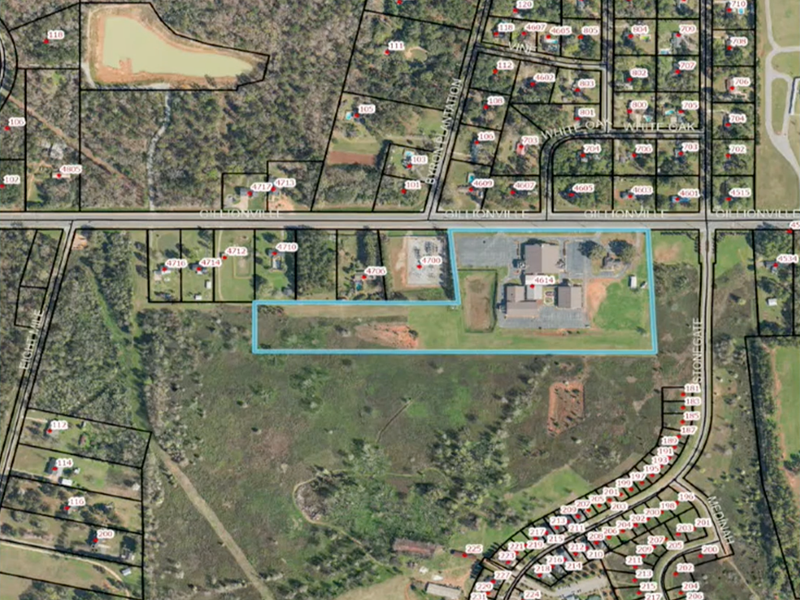
County approves 198-foot Gillionville Road cell tower; no speakers at public hearing
Dougherty County commissioners unanimously approved a 198-foot cell tower behind a church on Gillionville Road, with no one speaking for or against it at the public hearing.
