
Warming Pacific water could bring more severe storms to Albany area in fall, winter
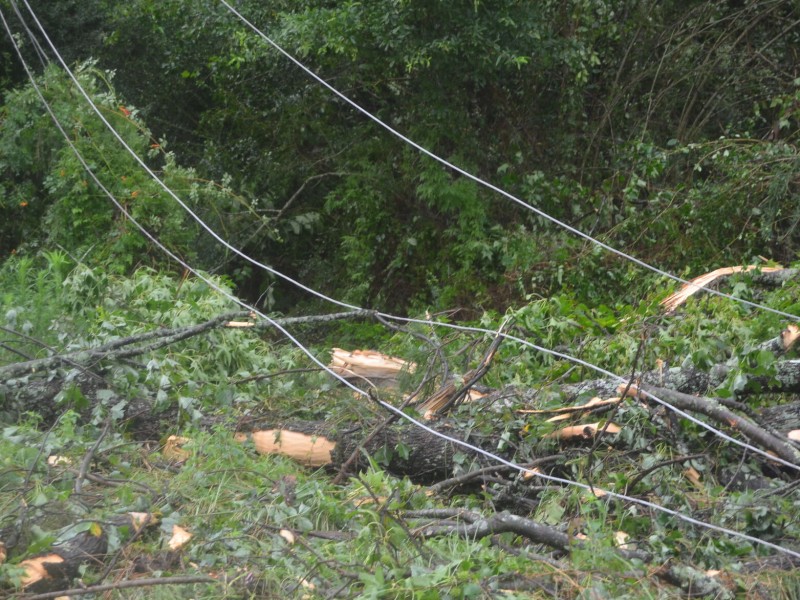
Staff Photo: Alan Mauldin
By Alan Mauldin
[email protected]
ALBANY — The “boy” is back, and although his arrival may not be felt much over the summer, it could make for a more severe weather events later in the year.
What that could mean, weather officials say, is more storm systems in the region in the late fall and into the winter.
In the short term, El Niño, Spanish for “little boy,” is expected to temper the hurricane season in the Atlantic Ocean and Gulf of Mexico. The National Oceanic and Atmospheric Administration has predicted a fairly normal year for hurricane activity, partially based on El Niño.
During normal conditions in the Pacific Ocean, trade winds blow west along the equator, taking warm water from South America towards Asia. But El Niño is a climate pattern that breaks those normal conditions, according to NOAA.
It can affect weather significantly. The warmer waters cause the Pacific jet stream to move south, and with the shift areas in the northern United States and Canada are dryer and warmer than usual. However, in the Southeast, the phenomenon generally brings about conditions that are wetter than usual.
In the near term, El Niño is one of several factors considered in the hurricane forecast, Mark Wool, warning coordination meteorologist coordinator for the National Weather Service office in Tallahassee, said.
NOAA’s forecast for the 2023 hurricane season that began on June 1 calls for a 40% chance of a normal season and 30% each of odds of a higher-than-normal or lower-than-normal season.
“There will be fewer of them,” Wool said. “That has nothing to do with them making landfall.”
This week’s mass of severe storm cells were not related to El Niño, the meteorologist noted. But in a few months, it could mean more severe weather.
El Niño does typically mean more precipitation in southern Florida and southwest Georgia, along with cooler winters.
“There are impacts in the cool season,” Wool said. “Some of the biggest are severe weather.”
In the Florida peninsula, that can mean a large spike in tornadoes, but that does not extend to southwest Georgia, he said.
Author

Related Articles
Albany Herald – July 11, 2026
Putting on the Ritz… Food, mini menagerie provide… Albany City Commission set to vote on… Following Lee’s lead, Terrell County hits…

Classifieds – July 11, 2026
Albany Classifieds and Legals: Real Estate; Merchandise, Misc…

Small actions can help save big on utility bills
The high temperatures of July and August can bring scorching utility bills as air conditioners hum to keep houses cool. Albany Utilities Residential Conservation Auditor Willie Jackson offered some tips on making summer cooling bills more manageable.
