
Gopher tortoise declining keystone species
Sightings are becoming fewer and farther between
By Bob Kornegay
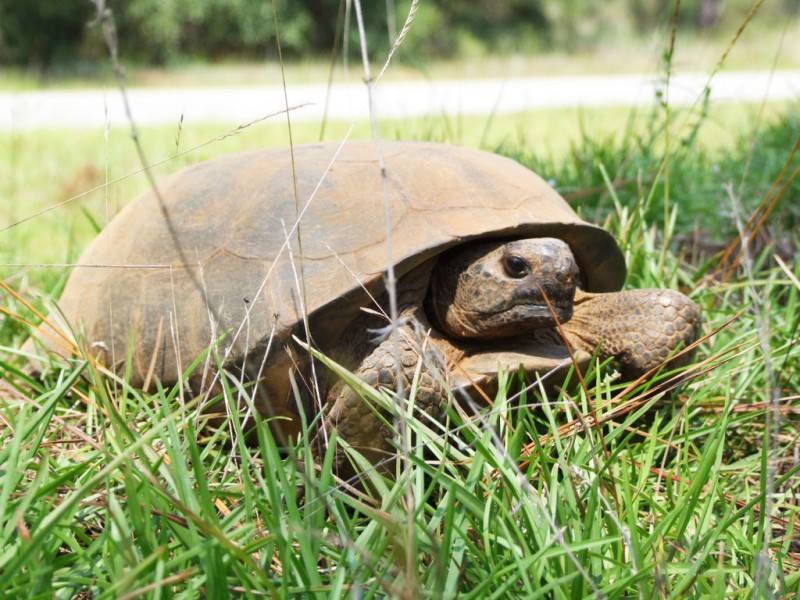
The venerable gopher tortoise ranks as one of south Georgia’s most intriguing wildlife species. This plodding, methodical, armored reptile is at once eye-catching and fascinating. Pure nature lovers might even describe the sluggish critter as winsomely attractive, albeit grotesquely so. Of all Southern turtles, the familiar “gopher” is one that seldom fails to capture the attention of most observers, first-time spotters or otherwise.
Few area outdoorsmen do not know the gopher tortoise. For untold decades our paths have intermittently crossed that of this only terrestrial tortoise east of the Mississippi River. Not many years ago, these chance meetings were not uncommon. Today, however, gopher sightings are becoming fewer and farther between.
Designated Georgia’s State Reptile in 1989, the gopher tortoise is now officially recognized for its contributions to the ecological balance of the state’s coastal plain habitat. Now listed as “threatened,” it is considered a keystone species in the rapidly disappearing longleaf pine/ wiregrass ecosystem. A keystone species is defined as any species whose extinction would result in measurable changes to the ecosystem in which it occurs.
Despite efforts of the Georgia Department of Natural Resources to restore longleaf pine communities in select state parks and other protected areas, the long-term future of the State Reptile is far from assured. Experiencing an 80 percent population decline over the past 100 years, the gopher tortoise has all but disappeared in portions of its native range. The largest and healthiest remaining populations are in Georgia and Florida. Remnant populations also exist in South Carolina, Alabama, Mississippi, and Louisiana. The main threat to the species is habitat loss and degradation, which occur as natural areas are converted to agricultural and residential usage. Human predation and road kill also take a toll.
Gopher tortoises belong to a group of land turtles that originated in North America about 60 million years ago, making the species one of the oldest living today. Adult gophers average slightly less than one foot in length, though some individuals grow up to 16 inches and can weigh almost 30 pounds. The front legs are broad and flat, almost like a shovel, and are tipped with blunt, spade-like claws. The back legs are elephantine and flat-footed. The top portion of the shell (carapace) is fairly flat. The head is moderately large and quite “prehistoric” in appearance. Color-wise, the tortoises are usually dark tan or gray. Adults are rather drab looking, in marked contrast to their brightly colored offspring.
Gopher tortoises dig burrows (hence the name) which generally range in size from 20 to 30 feet long and six to eight feet deep. These excavations are found in dry areas such as sandhills, flatwoods, and coastal dunes. They may also appear in pastures, old fields, and along grassy roadsides. A variety of other animals, such as gopher frogs, several species of snakes, and a number of small mammals depend on tortoise burrows for survival. The holes provide comfortable winter refuges and, in summer, are a vital source of humidity and condensed moisture.
Primarily herbivores, gopher tortoises feed on many species of low-growing vegetation. The bulk of their diet consists of grasses and legumes, but berries and other fruits are also consumed. They will also scavenge willingly and are opportunistic feeders, occasionally even feeding on dead animals or excrement. Most of the water taken in by the turtles is extracted from the food they eat. They rarely drink, though individuals have been observed drinking from standing waterholes during periods of extreme drought.
Gopher tortoises mate in spring and summer, between April and July. Two to seven eggs are laid in a sandy, shallow pit. The eggs are round, roughly the size of ping pong balls, and they incubate for 80 to 90 days. Interestingly, the sex of the offspring is determined by the temperature of the sand or dirt in the nest. If the temperature is above 85 degrees Fahrenheit, the hatchlings will be female. Temperatures below 85 degrees produce males. Nest predation by armadillos, raccoons, skunks, and foxes is a problem. It is estimated that less than six percent of eggs laid grow to tortoises that survive one year. Those that do hatch begin excavating their own burrows almost immediately. Their shells harden around five to seven years of age and they reach sexual maturity about age 20. Gophers are naturally long-lived. Given proper and ample habitat, individuals frequently survive 40 to 60 years and upward.
The gopher tortoise is an extremely important variable where ecological well-being is concerned. Removing this one keystone species from the equation would beyond a doubt adversely affect the survival of the entire Southern Coastal Plain ecosystem. To thrive, these vitally important creatures need three things: well-drained sandy soil (for burrowing), an abundance of low-growth plant life (for food), and open, sunny areas (for nesting and basking).
With those criteria in mind, and as good environmental stewards, we can all help wild gopher tortoises by preserving their upland habitat and, in general, by simply leaving them alone. It is unlawful to possess a gopher tortoise or any other native Georgia wildlife species without a special permit. Like all wild animals, they are not “pets.”
And, by the way, should you come across a confused old gopher seeking to cross a road, it’s quite alright to assist him. He’ll appreciate it. So will the 350-plus other wildlife species that depend on his burrow for survival.
Related Articles

Championship expectations return to Sherwood
Winning a state championship is difficult.

Derrick Harris: Life beyond the verdict
For more than three years, Derrick Harris lived a life he never imagined.

Moving the Chains: What in the World Cup?
I’ve never been a fan of soccer. One of the reasons is that I grew up playing the sports that most of us will end up watching from the couch. Football and basketball, for example.
